Early Years of the Airfield
RAF Fulbeck, located in Lincolnshire, was an important airfield during World War II and played a significant role in both RAF and USAAF operations. The airfield was well sited about three miles west of the village of Fulbeck and bounded on the west and east by country roads. It opened in 1940, when fields between the villages of Stragglethorpe and Fenton were acquired.
The airfield opened in 1940 and was used initially as a grassed Relief Landing Ground (RLG) for RAF Cranwell to relieve the congestion caused by the increased number of Oxfords used by the Colleges Flight Training School (FTS), until May 1942.
Flying from the site then ceased until October 1942 whilst the site was substantially enlarged, upgraded, and reconstructed as a Class ‘A’ bomber airfield for 5 Group. This was the standard wartime pattern of three intersecting concrete runways (01/19), (05/23) and (12/30), a circumferential outer taxiway, three opened-ended steel framed T2 hangars, several aircraft parking dispersal areas/spectacles around the perimeter, an air traffic control tower along the South East side, a headquarters building, airfield operations buildings (for briefing, orderly, security, armoury), a transport section, several support workshops, personnel support facilities (church, hospital), and blast shelters. The fuel and and ammunition dumps were dispersed to the north and south of the airfield, and the personnel accommodation and messing were dispersed to the east of the airfield. The airfield was then officially named RAF Fulbeck.
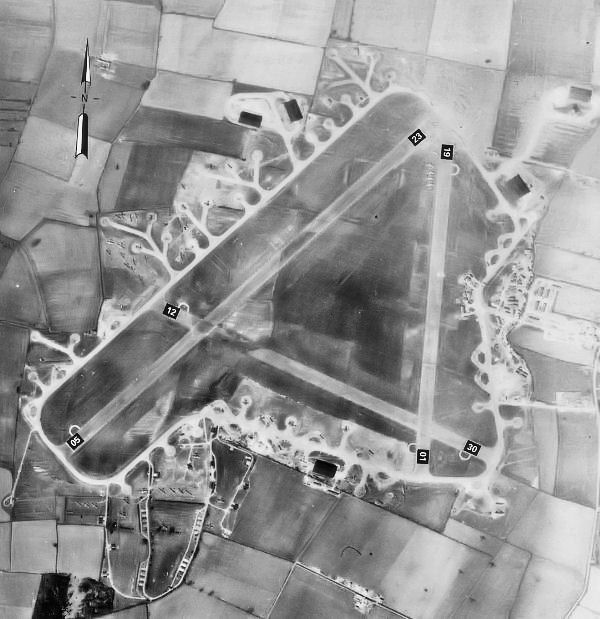
An aerial image of RAF Fulbeck, taken post airfield upgrade and in April 1945.
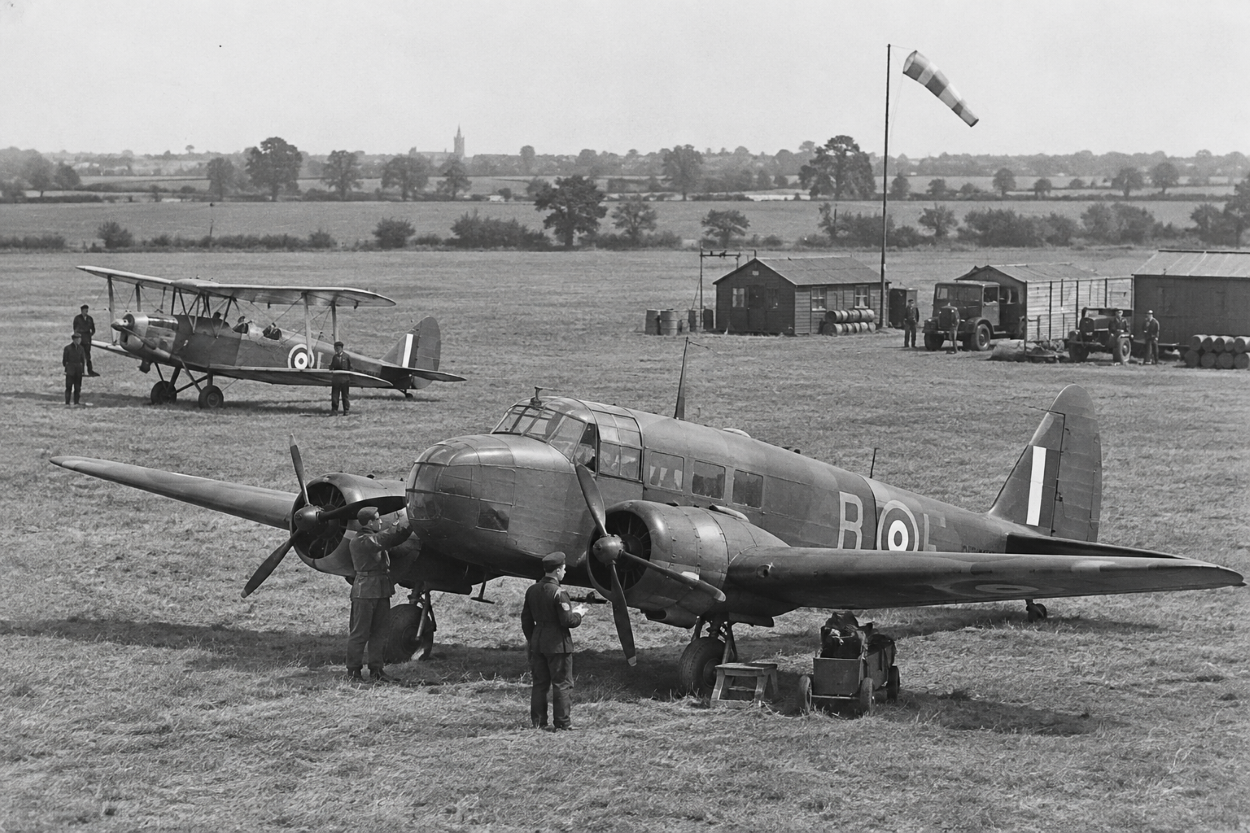
Early Photos of the RLG Before Creation of RAF Fulbeck are Difficult (Impossible!) to Find. This is an AI Representation of an Airspeed Oxford Operating From the RLG.
Post Airfield Upgrade Operations
Although the station was intended to support bomber operations, its role changed as the wartime organisation of RAF and USAAF forces developed. The station’s facilities made it very suitable for the arrival, servicing and movement of large numbers of aircraft.
On completion of the airfield upgrades, no front-line squadrons were deployed at the site, and it came again under RAF Cranwell operations for night flying training. In October 1942, 5 Group's Air Bomber Training Flight arrived, using Airspeed Oxfords, although not yet fully operational. In May 1943, 1506 Blind Approach (Beam) Training (BAT) Flight arrived, staying until August 1943, and using several aircraft types including Bristol Blenheims, Handley Page Hampdens, Airspeed Oxfords, and Douglas Bostons. During this period the airfield was also used by 1485 (Bomber) Gunnery Flight flying using Airspeed Oxfords and Vickers Wellingtons, and by No 11 Service Flight Training School (SFTS).
From April 1943 until April 1944 the airfield was also used to store Airspeed Horsa gliders, which were looked after by No 2 HGMU and were then handed over to the Allied Airborne Forces.
In October 1943, RAF Fulbeck was transferred to the USAAF for the use of the US Ninth Air Force and renamed USAAF Station 488.
USAAF Station 488
American ground units started arriving during the early days of October. In mid-October the 434th Troop Carrier Group (TCG), commanded by Colonel Fred D. Stevens, arrived at Fulbeck fresh from the USA. A typical TCG comprises of four squadrons and equipped with Douglas C47/C-53 Skytrain transport aircraft. Whilst at Fulbeck, 434 TCG were only engaged in local flying, training for airborne operations and transporting supplies. The only action they saw was on the morning of December 7 1943 when Halifax EB187 of No 1664 CU landed at the airfield because of fuel shortage while on a training flight. The aircraft was refuelled and, as it attempted to take off, it swung to one side and the undercarriage collapsed. In December 1943, 434 TCG began to move to RAF Welford Park for a training exercise with Allied paratroopers and did not return until January 1944. In March 1944, 434 TCG left Fulbeck and relocated to Aldermaston.
There were no flying units in residence until the arrival of the 442nd TCG in March 1944, commanded by Colonel Charles M. Smith, and newly formed group arriving directly from the USA. It was a new group, also with four squadrons, and was assigned to the 50th Troop Carrier Wing (TCW). Initial operations for the 442 TCG from March to May were training. On the 6th June, D-Day, they took part in Operation Boston with the US Army’s first Airborne Division, the 82nd Airborne Division. 45 transport aircraft took off and headed for Drop Zone 'T', two miles south-west of Ste-Mére-Église, where at 02.40 hours they air dropped the 1st Battalion 507th Paratroop Infantry Regiment and the Regiment’s headquarters. Three aircraft were shot down, 28 received minor damage. The group received a Distinguished Unit Citation. The next day, 56 aircraft took part in Operation Memphis, resupplying the American 101st Airborne Division. These were the only operational missions the 442 TCG flew from RAF Fulbeck, and by the end of June 1944 they had moved to Weston Zoyland.
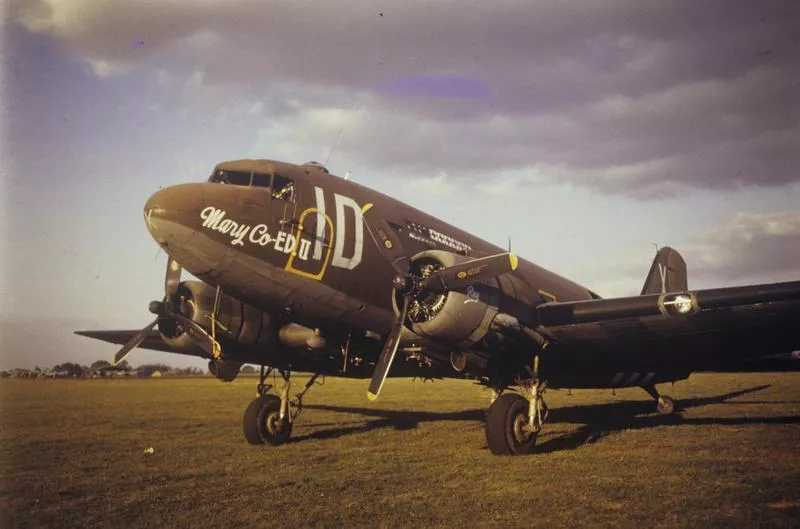
C-47 Skytrain nicknamed "Mary Co-Ed II" of the 434th Troop Carrier Group.
Images of Damage Caused Due to an Ant-Tank Mine Loading Explosion on 22nd September 1944.
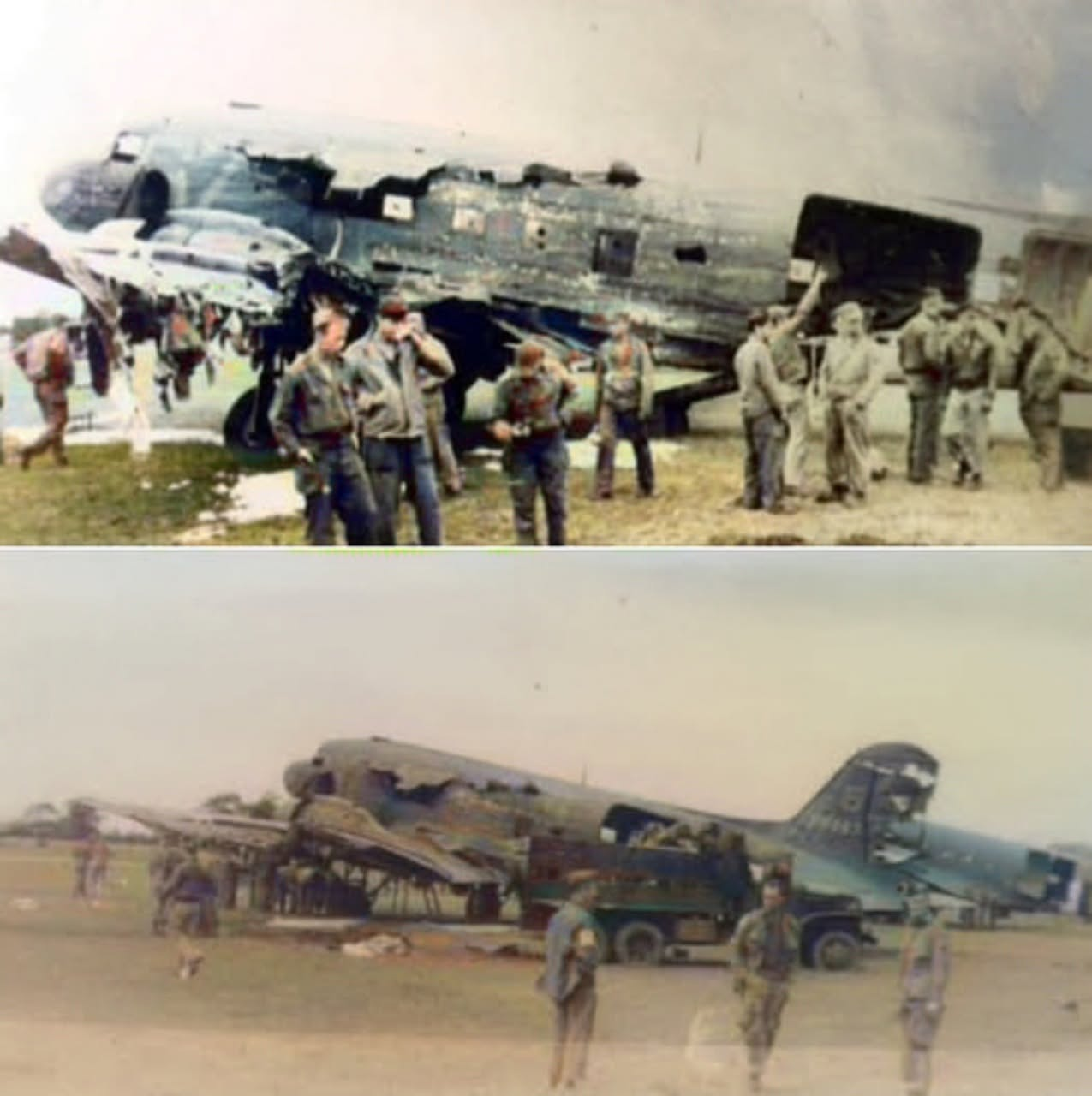
At this point, preparations were made to hand the airfield back to the Royal Air Force, and at the end of June No 1660 Heavy Conversion Unit (HCU), based at RAF Swinderby, started using the airfield for circuits and bumps.
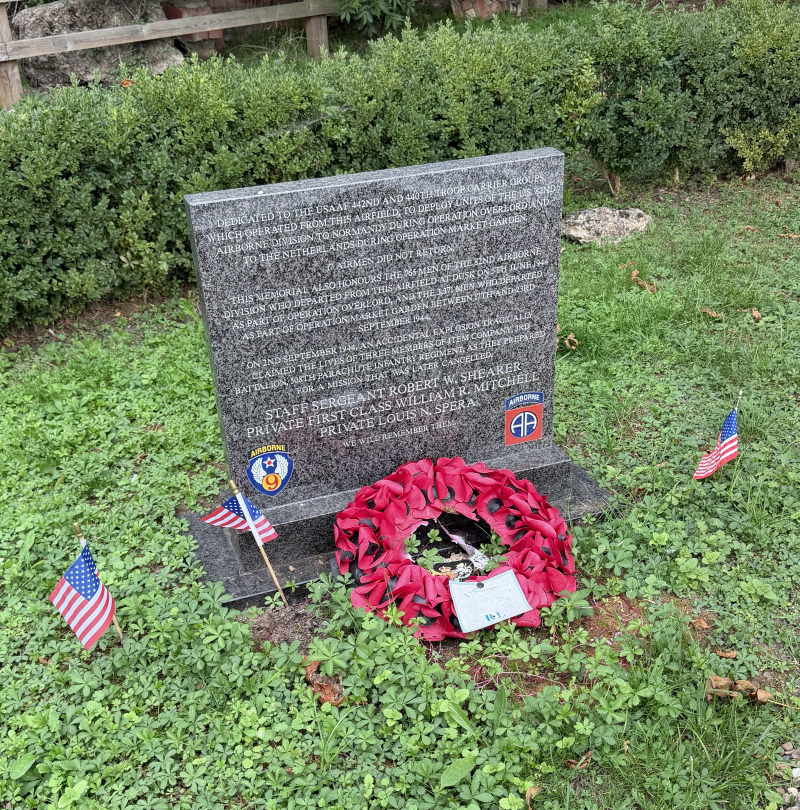
Plans changed, and in early September 1944 the USAAF 440th TCG, commanded by Colonel Frank Krebs, arrived from Exeter to initially train for Operation Comet, the forerunner of Operation Market Garden. However, the operation was cancelled and the 440 TCG briefly returned to its Exeter base, before again returning to Fulbeck in mid-September 1944 for Operation Market Garden. On the 17th September 1944, 90 aircraft of the 440 TCG, carrying the 376th Parachute Field Artillery, took off from Fulbeck and rendezvoused with the main force above March, and headed for their drop zone near Nijmegen. Many of the Group's aircraft were shot down during this mission, including Colonel Krebs, and he had to return to his with the help of the Dutch Resistance. 440 TCG flew only two more glider tow missions from RAF Fulbeck, during the Battle of Arnhem on the 18th and 23rd September. Unfortunately, on 22nd September, three paratroopers died and two aircraft were destroyed in an explosion that occurred during the loading of anti-tank mines onto C-47 Bama Belle, when one of the mines was accidentally dropped and a faulty detonator triggered an explosion that ignited all the remaining mines. The three paratroopers of 508th Parachute Infantry Regiment, 82nd Airborne Division, Staff Sergeant Robert W Shearer, Private First Class William R Mitchell, and Private Louis M Spera, are remembered by a memorial that was erected at the original main camp gate on the 26th August 2026. 440 TCG redeployed to transport duties in France on the 24th September 1944. This ended the period of USAAF operations from Station 488, and the airfield was returned to the Royal Air Force and reopened as RAF Fulbeck for 5 Group, Bomber Command operations.
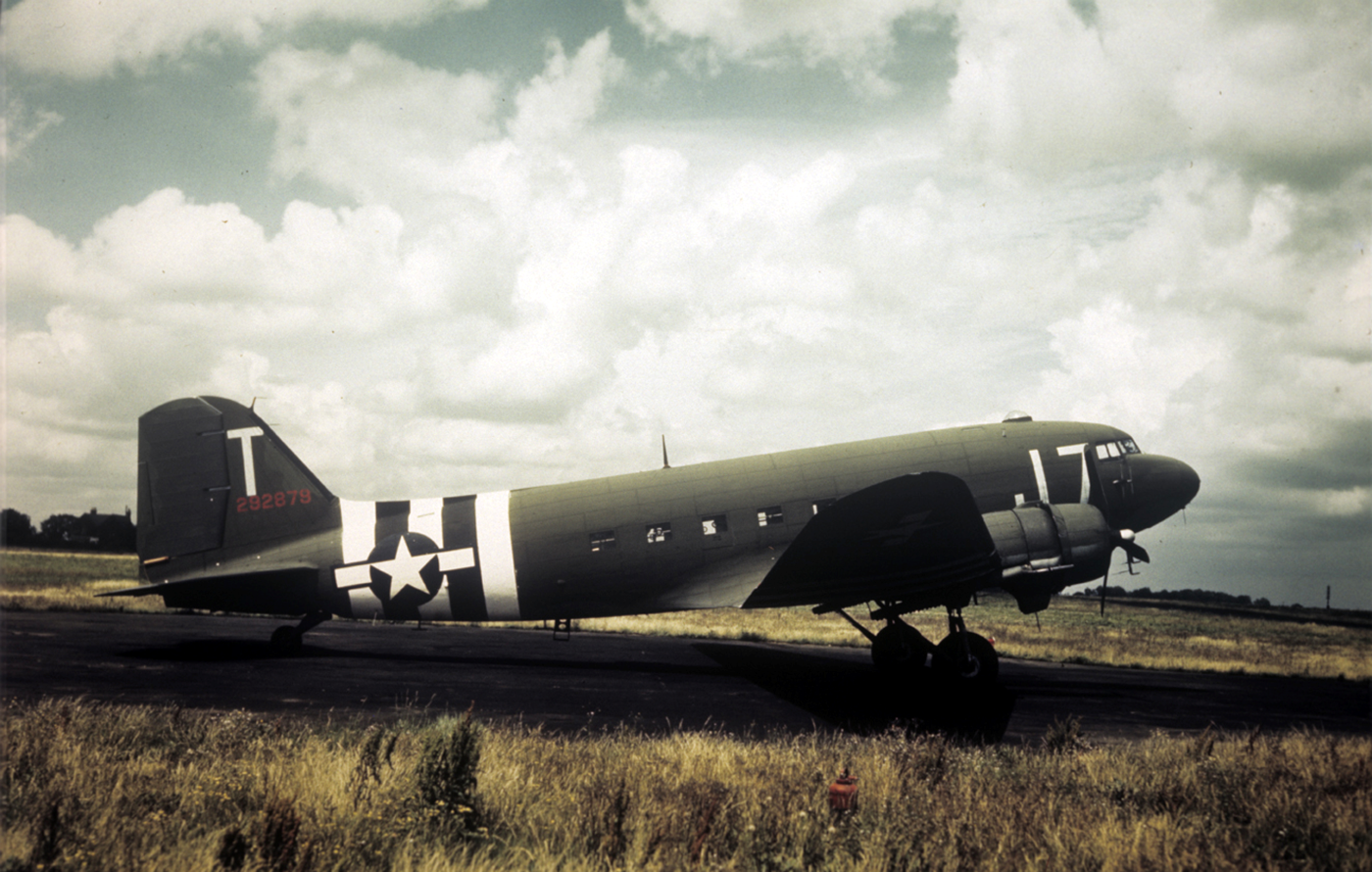
A C47a of the 442nd TCG in Normandy Colours.
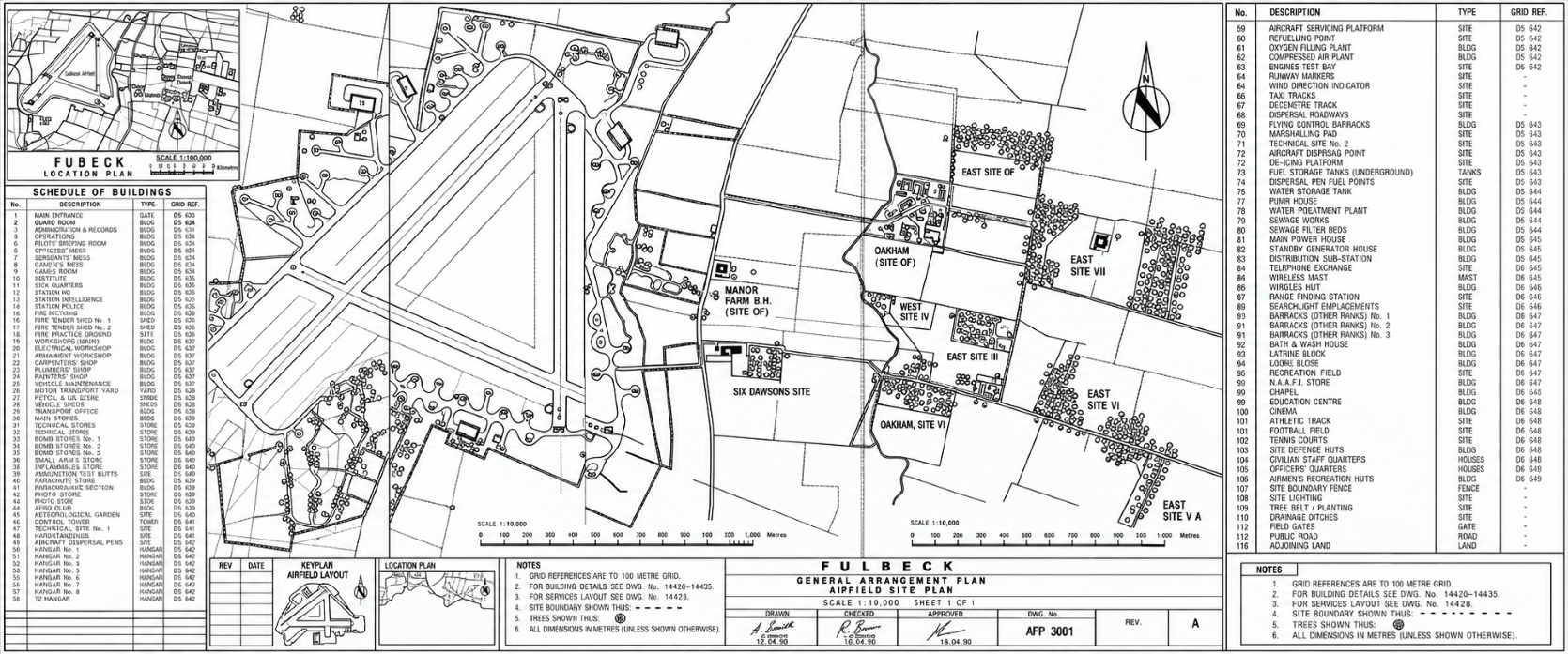
This is an AI Composite Plan of RAF Fulbeck, Created From Many Different Plans. It is Saved as a .PNG File, so You Should be Able to Save and Zoom in to See More Detail.
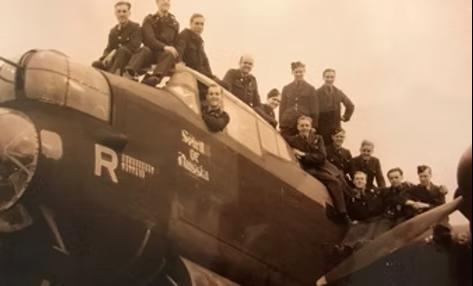
Avro 683 Lancaster MkIII, Tail No: EE136, delivered 31st May 1943, was known as "Spirit of Russia" and served with 189 Sqn. She was removed from flying on 9th April 1946 after completing her 109th mission, and retained as a training airframe no: 5918M
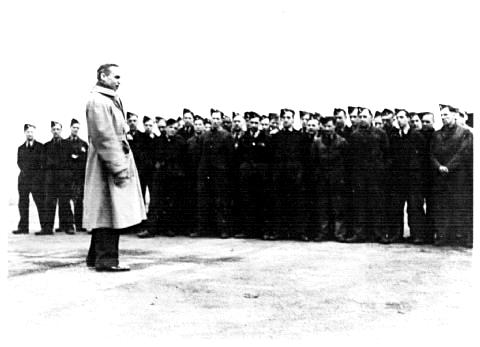
Air Office Commanding (AOC) Visits 49 Squadron at RAF Fulbeck
Bomber Command 5 Group Wartime Operation at Fulbeck
In October 1944, 49 Squadron arrived from RAF Fiskerton with their Mk1 and MkIII Lancasters. They were joined by 189 Squadron from RAF Bardney in November 1944, the squadron having formed just two weeks previously. In December 1944, both squadrons were part of a bombing assault on the German Baltic Fleet at Gdynia, and in March 1945 they helped in the bombing assault of German defences of Wesel. In April 1945, 49 Squadron moved from RAF Fulbeck to RAF Syerston, after flying 60 raids from the airfield and losing 15 aircraft. On the morning 22nd April 1945, a 49 Squadron Lancaster was making a low farewell pass across the airfield, but crashed into the technical area, resulting in 15 fatalities and a further 9 casualties. In late April 1945, 180 Squadron made its last operational bombing mission, with 14 Lancasters taking part in assault on the Vallo oil refinery. The squadron’s final operations were helping to drop food in Holland and ferrying British troops home from Italy. In October 1945, 189 Squadron moved to RAF Metheringham where it was disbanded a month later. During its very short 12-month lifespan, 189 Squadron flew 40 raids from RAF Fulbeck, some 647 sorties, with 16 aircraft lost. After VE Day the airfield’s operational use quickly declined, but the Automatic Gun Laying Turret Flight with their Lancasters did use it for a brief period until late 1945.
Post WWII History of RAF Fulbeck
From the end of WWII, RAF Fulbeck remained an active station, initially involved with equipment storage and disposal. During the 1950s, the airfield was home to the Air Historical Branch’s aircraft collection, many of which are now in the RAF Museum.
Through 1953 and 1954 the runways were repaired and RAF Fulbeck opened again as a RLG for Cranwell until about 1970, when the airfield finally closed to flying operations.
By the end of the 1970s, most of the site facilities had been dismantled and removed, with just the control tower and one deteriorating 'T2' hangar that was in a semi-derelict state. The runways, apart from narrow strips used as farm roads and small sections of the 30 and 01 runway ends, and all but three of the hard standings were removed in the 1970s, with most of the concrete believed to now be under Lincoln’s western bypass.
Whilst the site was still MOD property, it became a military training area, including use in September 1980 for manoeuvres during Exercise Crusader.
In the 1990s the MoD agreed plans with Nirex to start nuclear waste processing at RAF Fulbeck. Construction on the processing plant was started, but public protests and sabotage led to the cancellation of the plans and contract, and the Nirex buildings were demolished.
In the early 2000’s, the MoD sold RAF Fulbeck, and the site was turned over to mainly arable crop farming.
In 2013, EnergieKontor UK Ltd applied for planning permission for ten 110-metre-high wind turbines at RAF Fulbeck. There was overwhelming local opposition to the plans, with negative visual impact on the countryside, local impact of large construction traffic, the area not being identified as suitable in local plans, and air safety concerns from the MoD. Due to this, the application was finally refused in March 2017.
During the 1950s, American servicemen started kart racing at RAF Fulbeck, and locals soon joined them, racing home-built machines inside an aircraft hangar, but with the sport rapidly expanding it transitioning to the airfield’s runways by 1959. Despite the airfield moving from RAF command to MoD control, and now to local farmland, Fulbeck Kart Club continues to thrive onsite, utilising the cross-section of the original 01/90 and 12/30 runways.
The original WWII mess hall is now known as Mannakin Hall, home to thousands of mannequins that have been used on TV sets and music videos.
As well as the recent memorial to the three 82nd Airborne Division paratroopers at the original main camp gate, there is also situated there the Flt Sgt Ken White memorial, which was erected in 1988 by the Bomber Airfield Society ‘in memory of all those that flew from RAF Fulbeck, never to return’ between 1940 and 1945.
RAF Fulbeck is also GDMAS’ home for our airstrip for fixed wing, helicopter, and control line model flying.
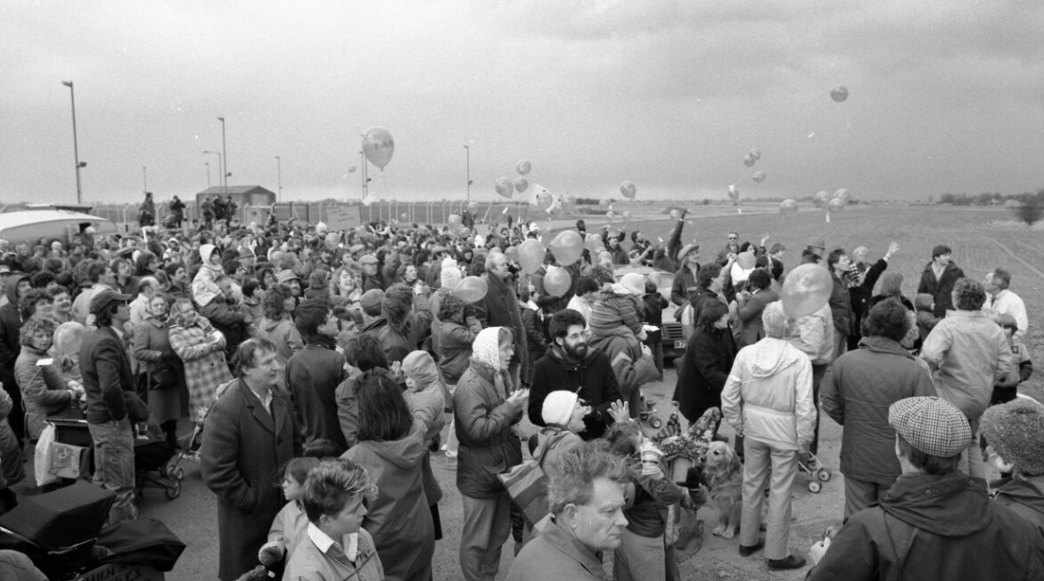
Fulbeck's Own Nuclear War! Local Protestors March Against NIREX's Plans For Nuclear Waster Processing at RAF Fulbeck.
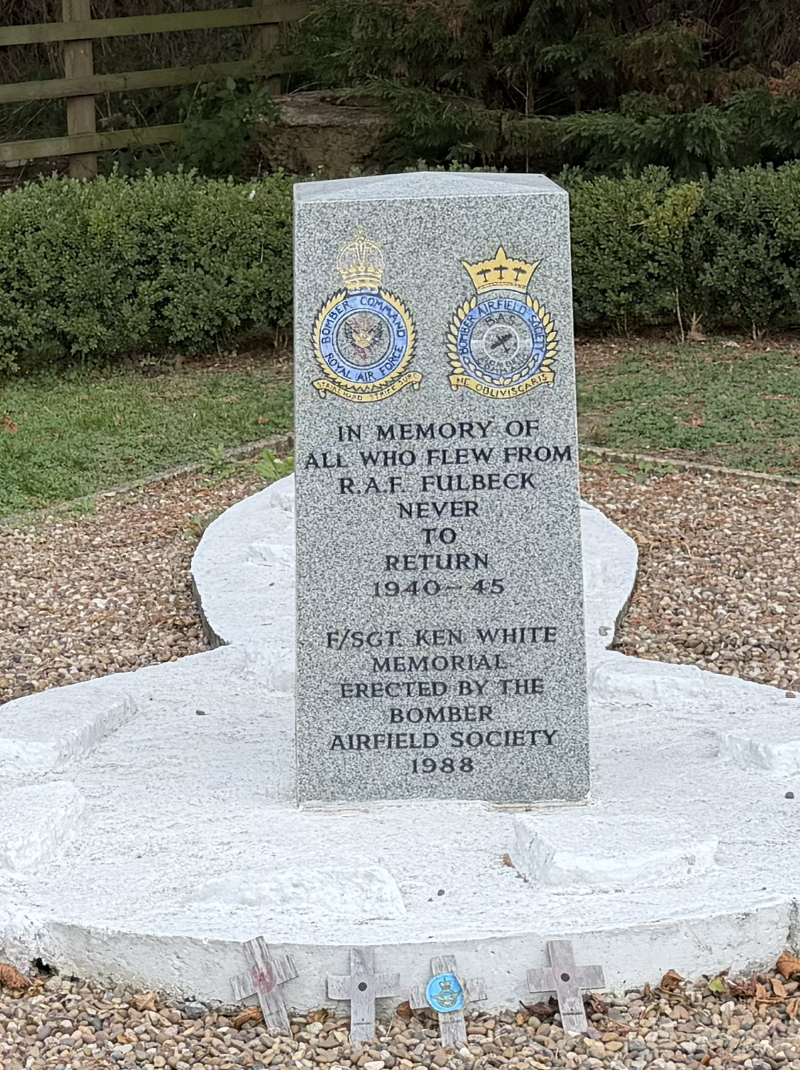
The Flt Sgt Ken White memorial, which was erected in 1988 by the Bomber Airfield Society ‘in memory of all those that flew from RAF Fulbeck and never to return’ between 1940 and 1945.